
Academic
Affordable Housing Study
As part of a seven week research project, our team focused on human-centered research practices in order to dive into issue of affordable housing in Pittsburgh. Our goal was to identify the breakdowns in the system and ideate potential solutions that could address these problems.
Research was presented to Mayor Peduto of Pittsburgh in April 2017.

Team
Nila Banarjee
Imogen Todd
Anqi Wan
Duration
7 weeks
Role
Human-Centered Research
Ideation
Reporting
Mission statement:
"To facilitate the transition into affordable housing for young section 8 applicants."
At a national level, government-subsidized housing is provided through Section 8 of the 1973 Housing act through the Department of Housing and Urban Development (HUD). In Pittsburgh, residents can apply for affordable housing through the Housing Authority of the City of Pittsburgh (HACP). Numerous programs exist for individuals and families looking for affordable housing, the most common being the Housing Choice Voucher program, which is tenant-based, and the Project-Based Housing Voucher program, which is unit-based.

A stakeholder map places the individual at the center and analyzes them in relation to the system at hand. Stakeholders being the individuals, community leaders, groups and other organisations who impact the individual throughout this experience are stated along with their impact in order to examine spheres of influence and potential breakdowns. Mapping this information help us decide what idividuals to interview in the next phase of our research.
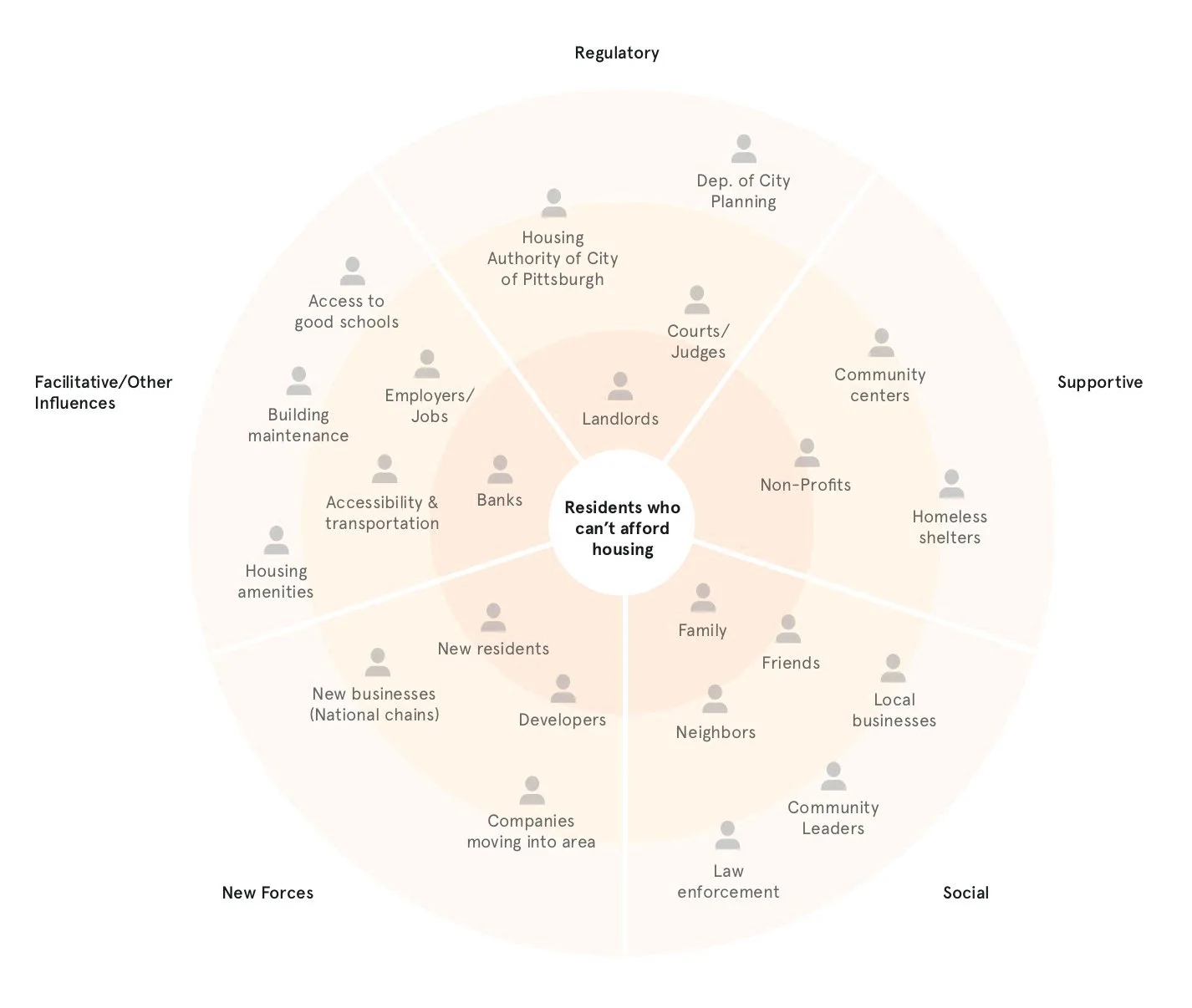
Stakeholder Map
We conducted seven interviews in total; 3 expert interviews and 4 contextual inquiries. "Expert" interviews were those with people who had higher level knowledge about the process: someone who worked at a non-profit helping applicants through the process, a landlord participating in the Section 8 program, and the director of the Housing Authority of Pittsburgh.
Contextual inquiries were with people who had gone through or attempted to go through the Section 8 application process.
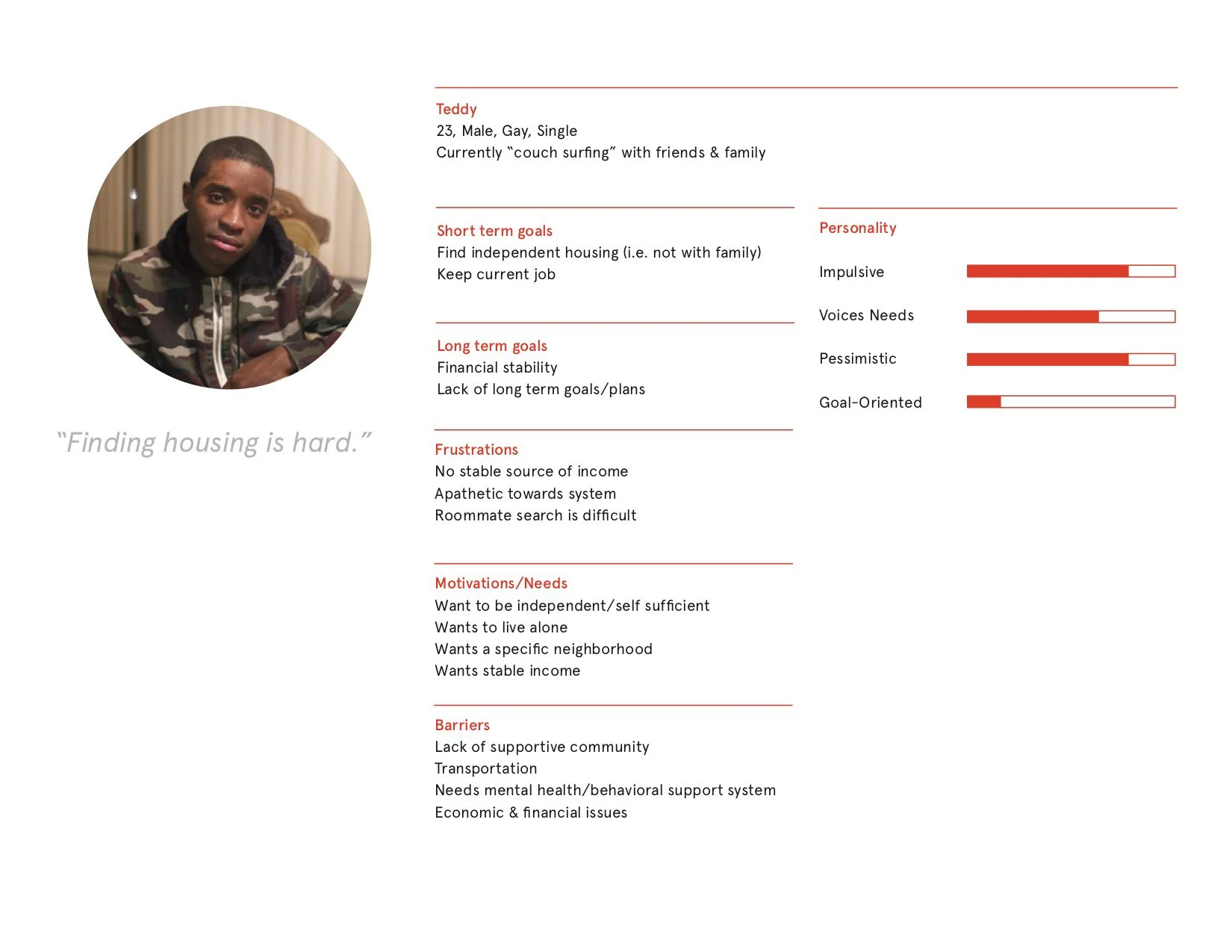
Typical Section 8 Applicant
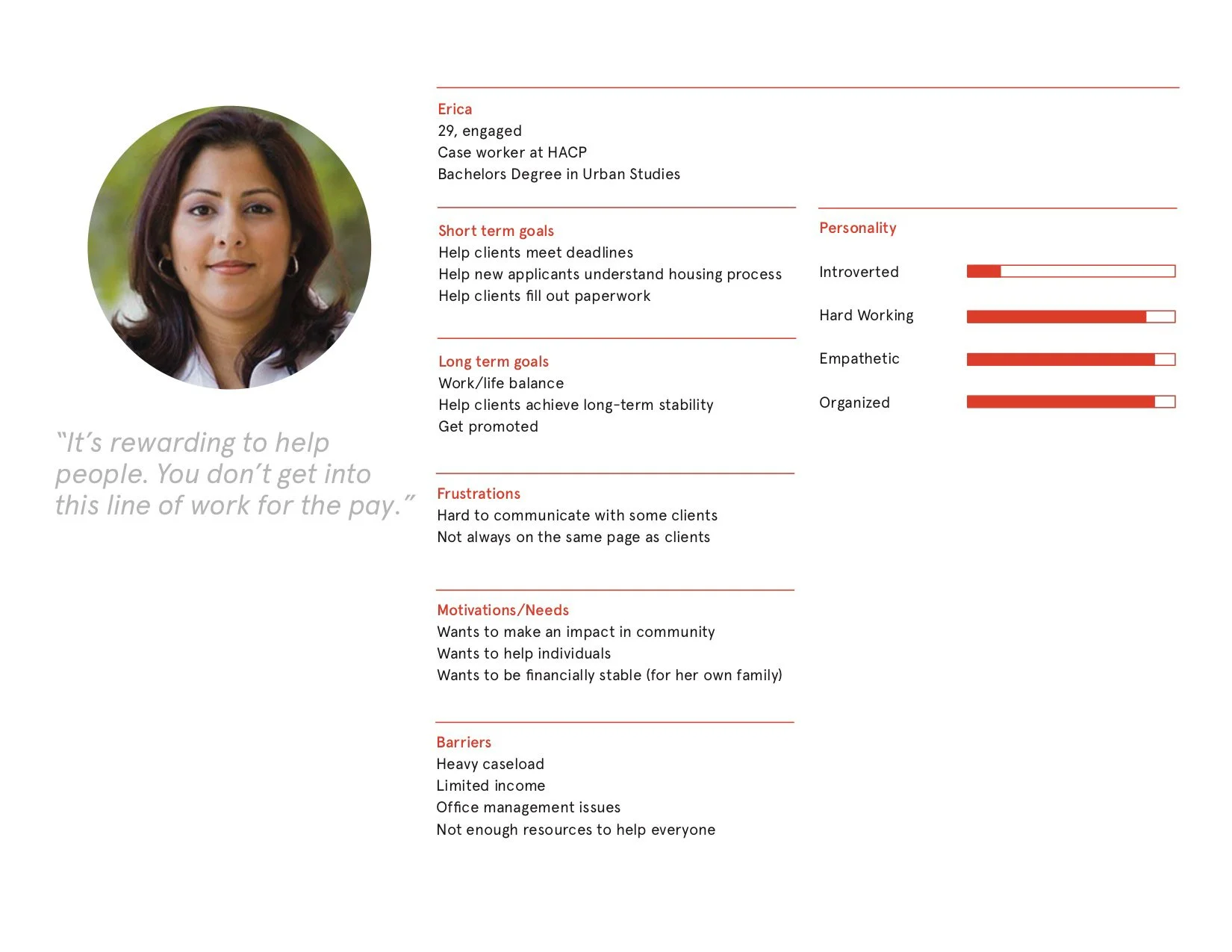
Typical Housing Authority Case Worker
A journey map details a user’s experience of a process including the actions they took, the phases involved, and the thoughts they experienced. It also includes the points at which they made contact with the related entity and a graph of the emotions they experienced. Considering the individual’s perspective from journey maps help identify breakdowns and target areas for improvement within an interaction.
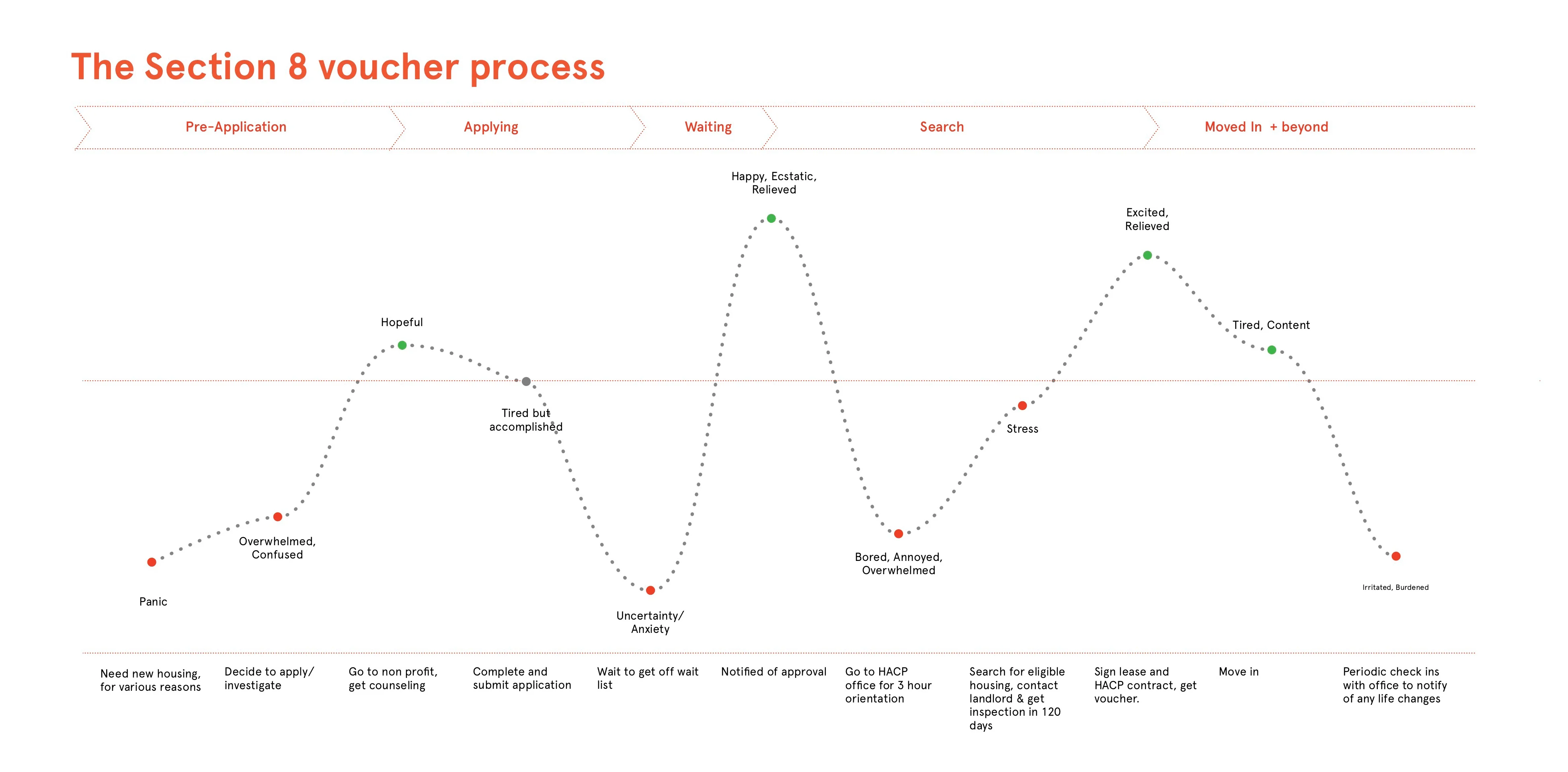
Journey Map: Expected Application Process
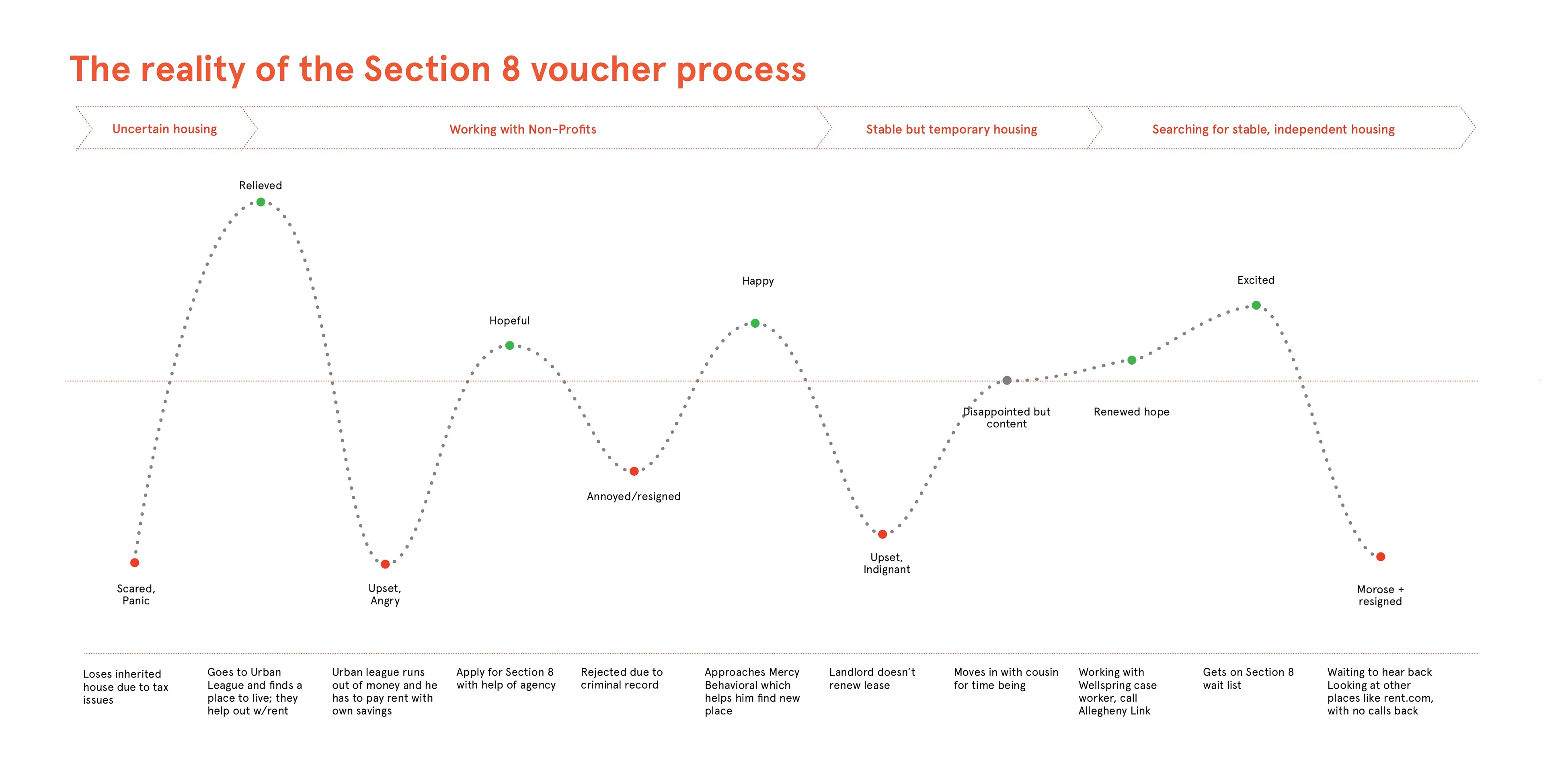
Journey Map: Reality of Application Process
Key Findings:
1. Individuals and agencies hold discordant views on the system and process.
2. The supply of housing, information, and resources does not meet the demand in any way.
3. The channels through which information flows are unreliable.
With our key findings in mind, we identified two main problem areas. We then brainstormed different “How might we...” questions that we might try to address the issues around housing that we found in our research.
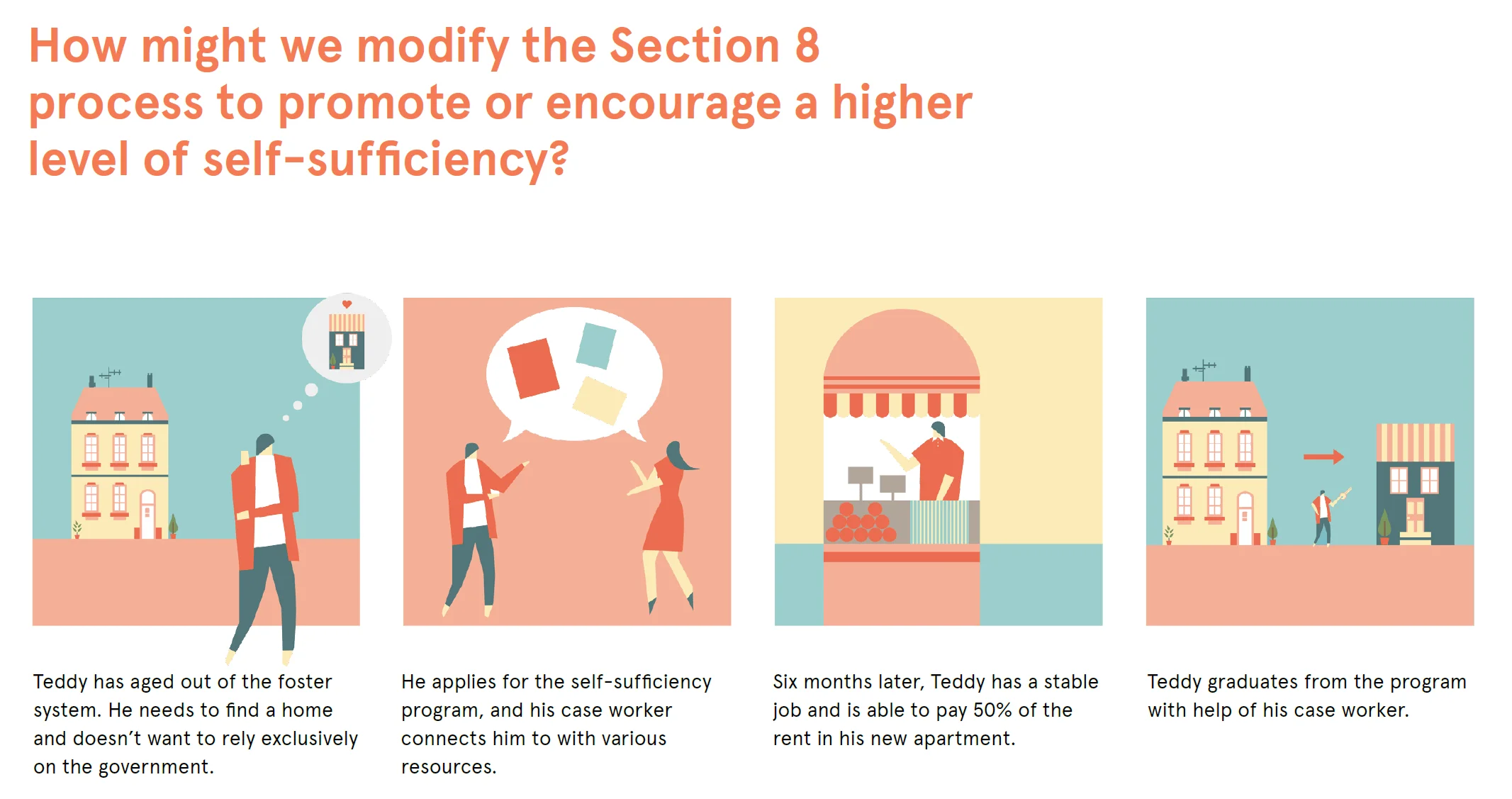
Problem Area 1: There is no centralized list of all affordable housing resources.
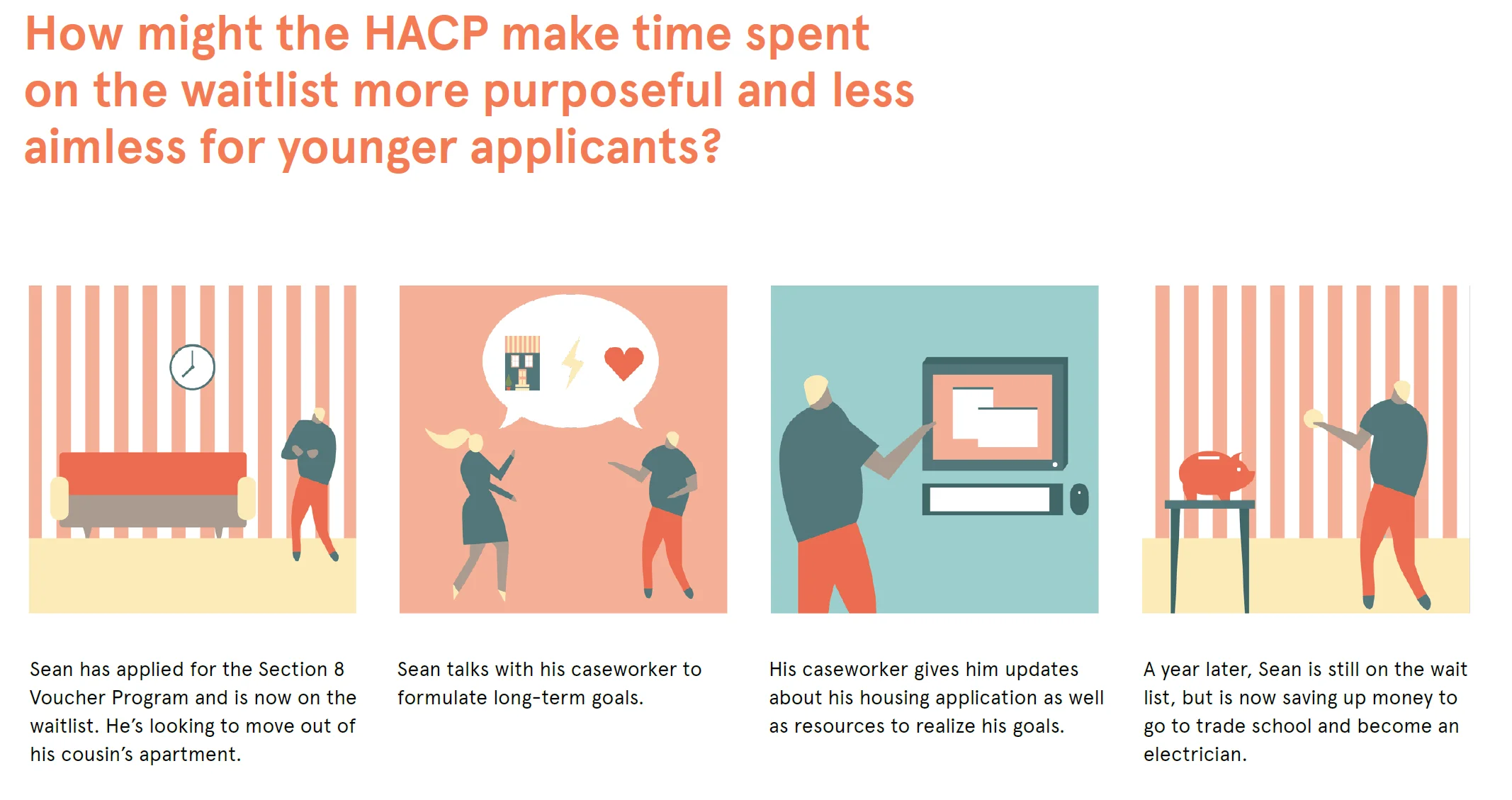
Problem Area 2: People lack information during the "waiting" phase of the process.
If we were to continue this project, we would start by interviewing a more diverse set of individuals in need of housing and organizations involved in the Section 8 process to more specifically find breakdowns within the system. Furthermore, we would look at other cities and other contemporary programs to understand how they have handled housing shortages and perhaps use their policies to inform our solutions, and continue the project to actively try to affect change in these systems.